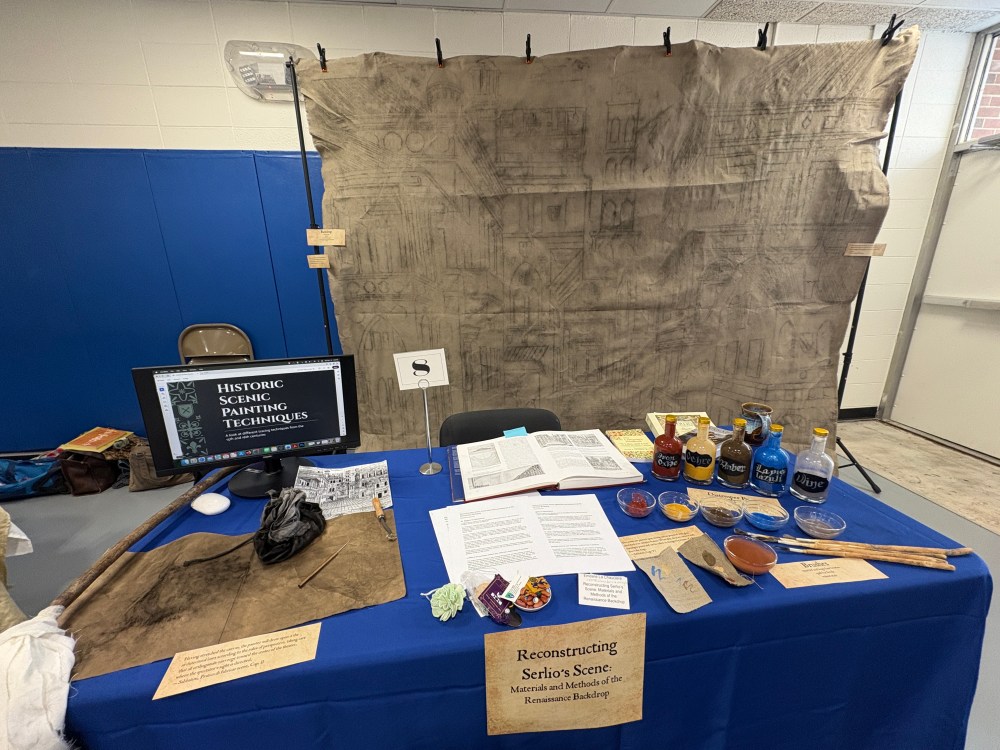
Yesterday I had the joy of competing in the Artisan Level Challenge at St. Eligius, hosted by the Barony of Dragonship Haven– and what an extraordinary day it was! I’m thrilled (and still a bit stunned) to share that I won my division and received the Populace Choice Award.
This project has been one of the most invigorating and artistically satisfying things I’ve worked on in the SCA: a recreation of a 16th-century Italian theatrical backdrop, created using historically documented scenic-art processes. As someone who is both a practicing scenic designer and professor in the modern world, and an artisan in the Society, I loved the way this project let my two creative lives entwine.
The Project: Painting the Renaissance Stage
My entry explored the techniques described by Italian artists, critics, architects, and stage designers such as Serlio, Vasari, Sabbatini, and Cennini. These men left behind rich written accounts of how early painted scenery was constructed, transferred, and brought to life– everything from making brushes to scaling drawings to mixing pigments.
For St. Eligius, I created:
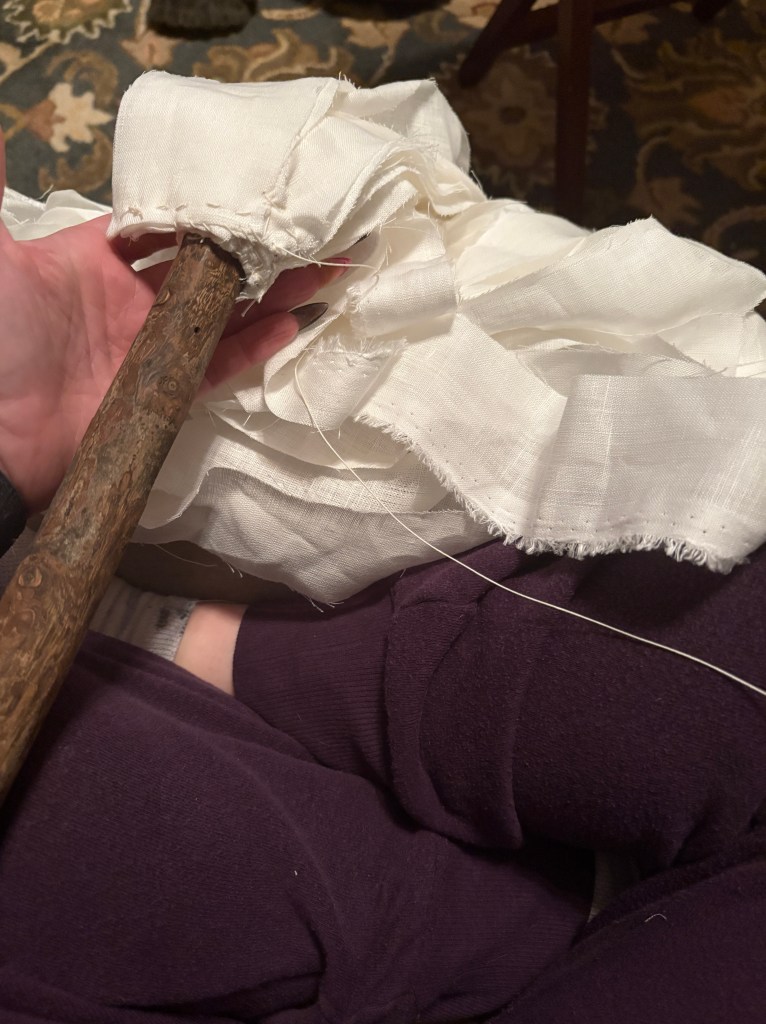
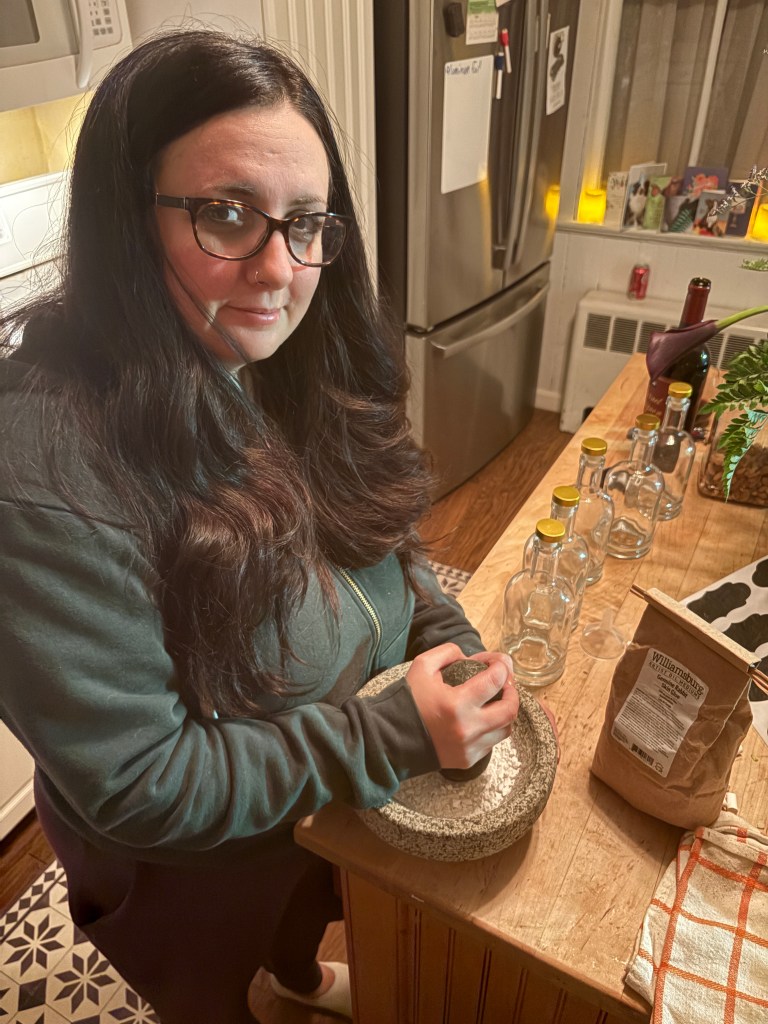
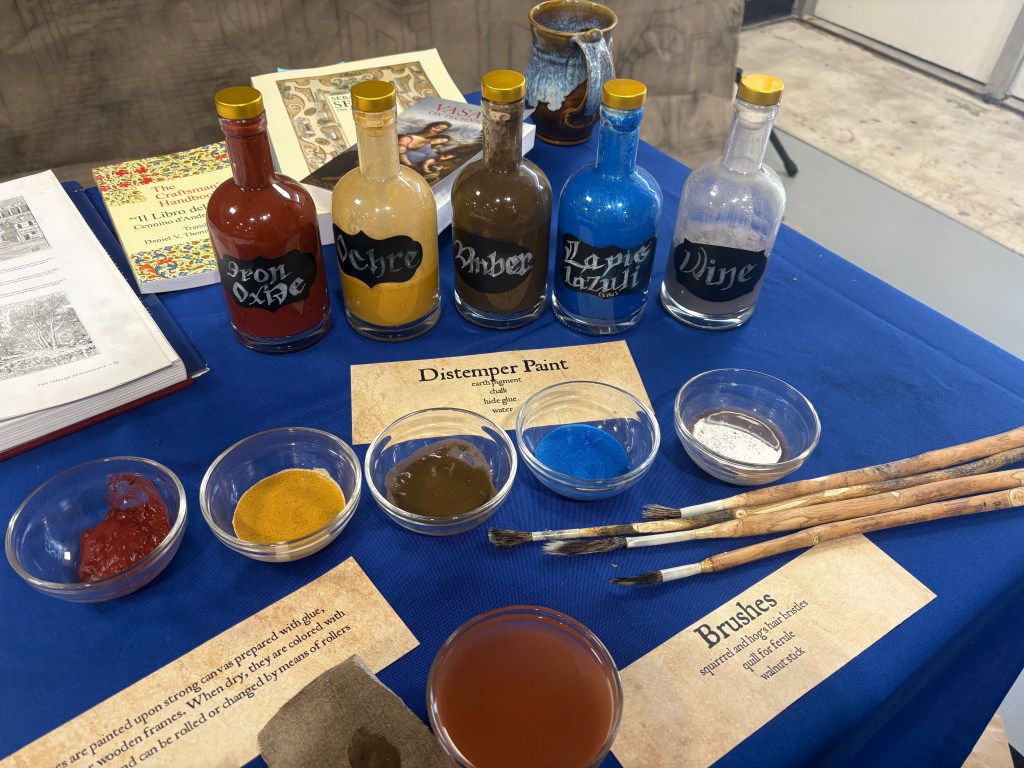
- Handmade squirrel-hair and hog hair brushes, bound and trimmed following period descriptions from Cenini.
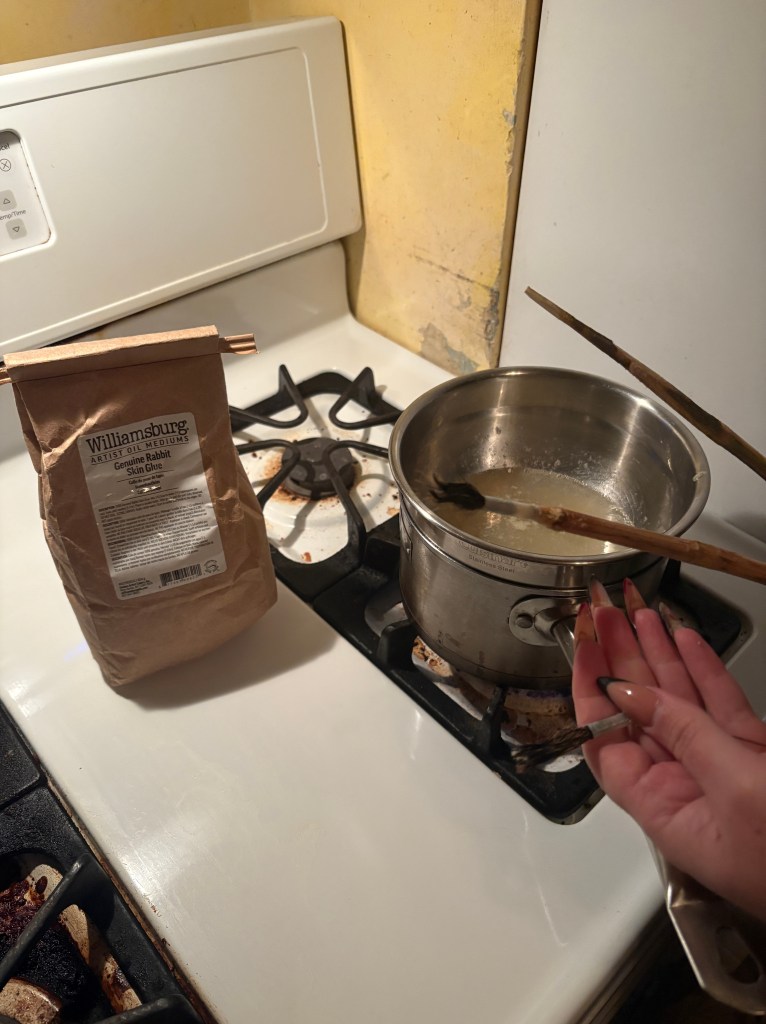
- A set of handmade distemper paints, mixed from pigments and animal-glue size pulled from Cenini and Vasari.
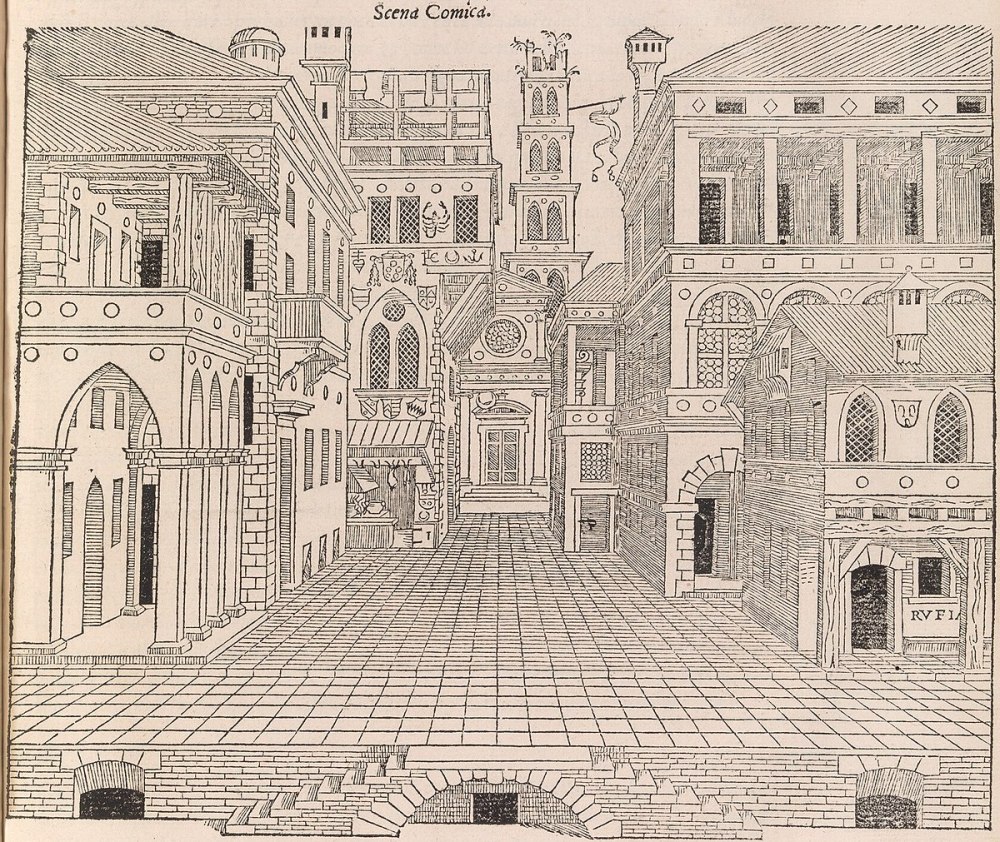
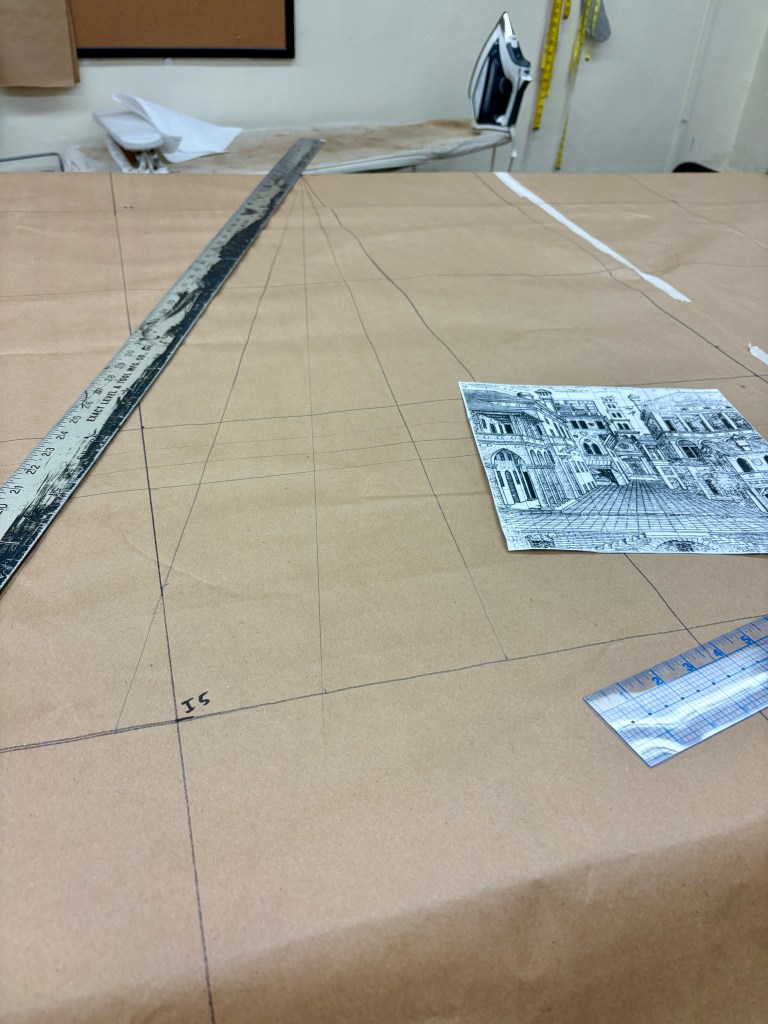
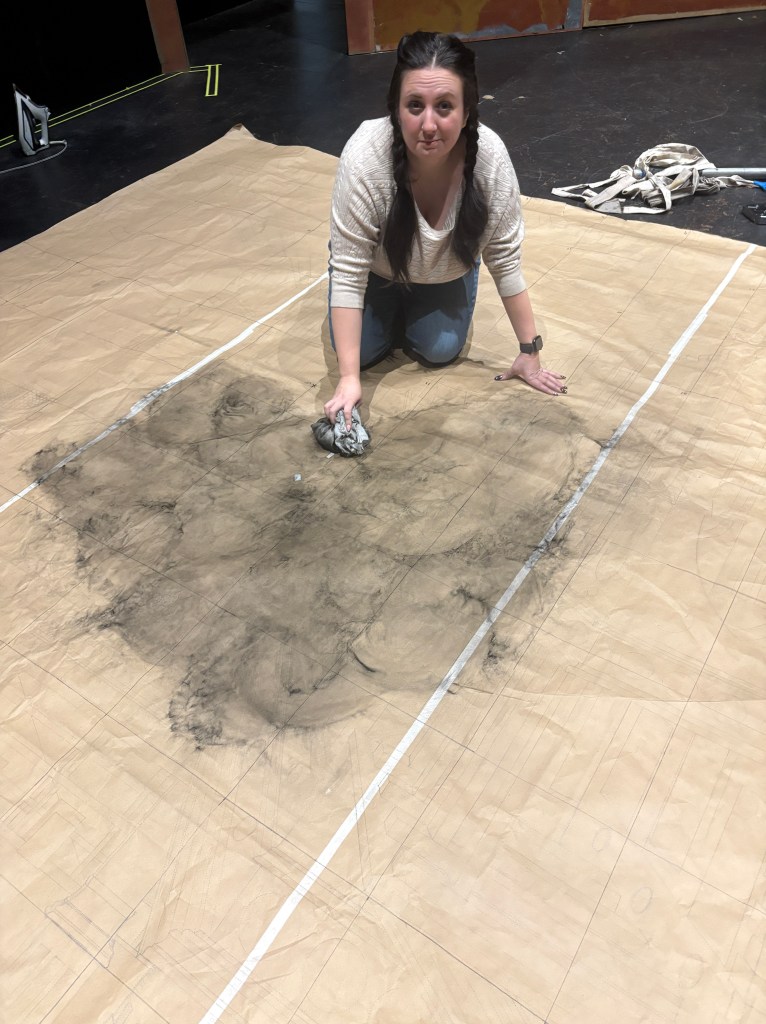
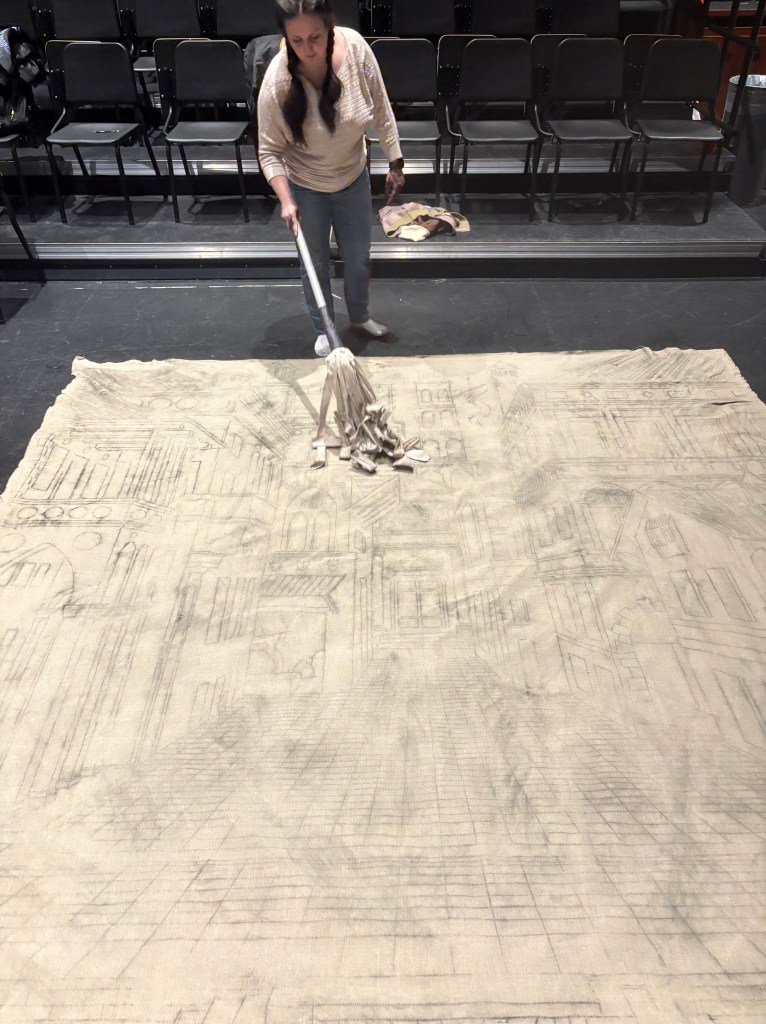
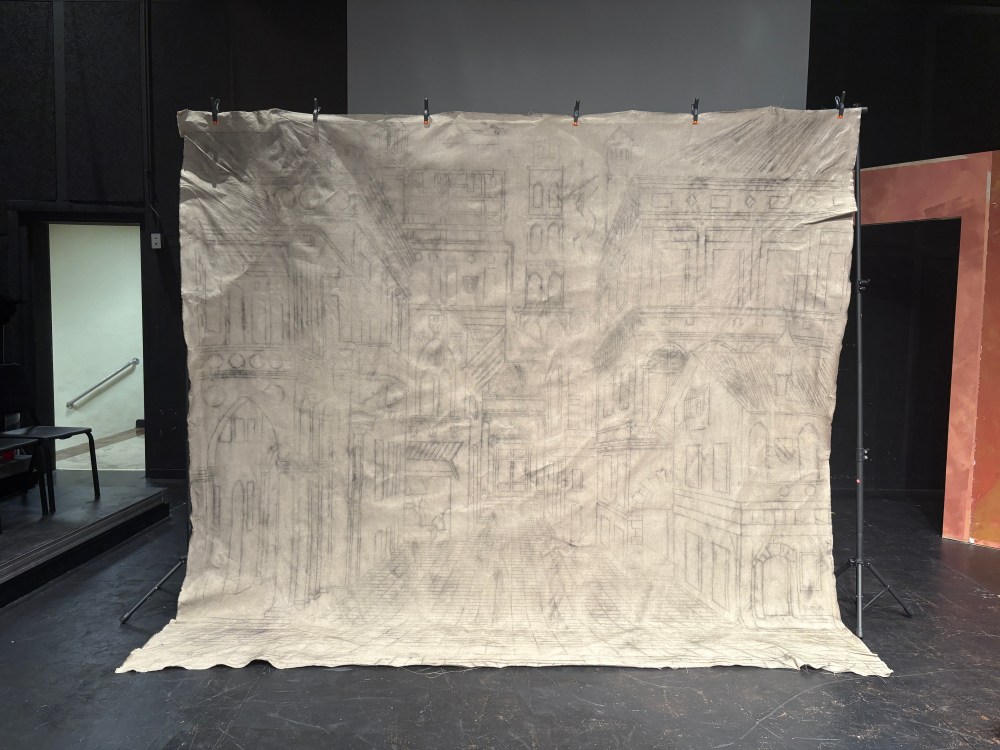
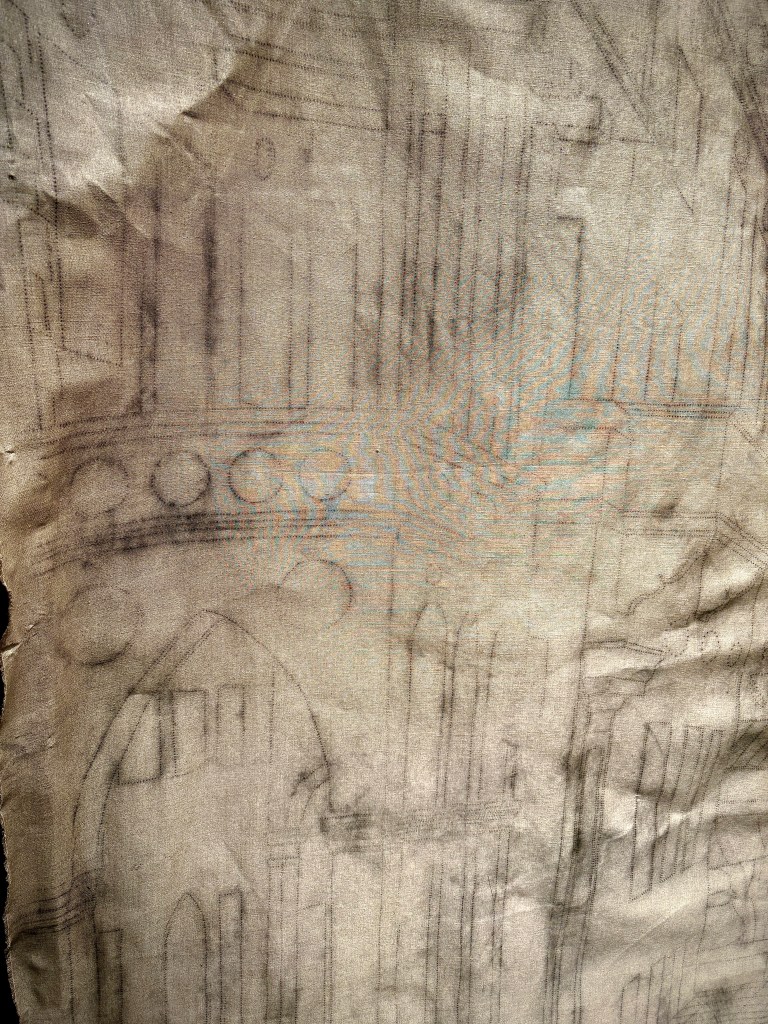
- A gridded cartoon of Serlio’s comic scene, scaled, in perspective pricked, and pounced using the spolvero transfer method detailed by Vasari and Sabbatini.
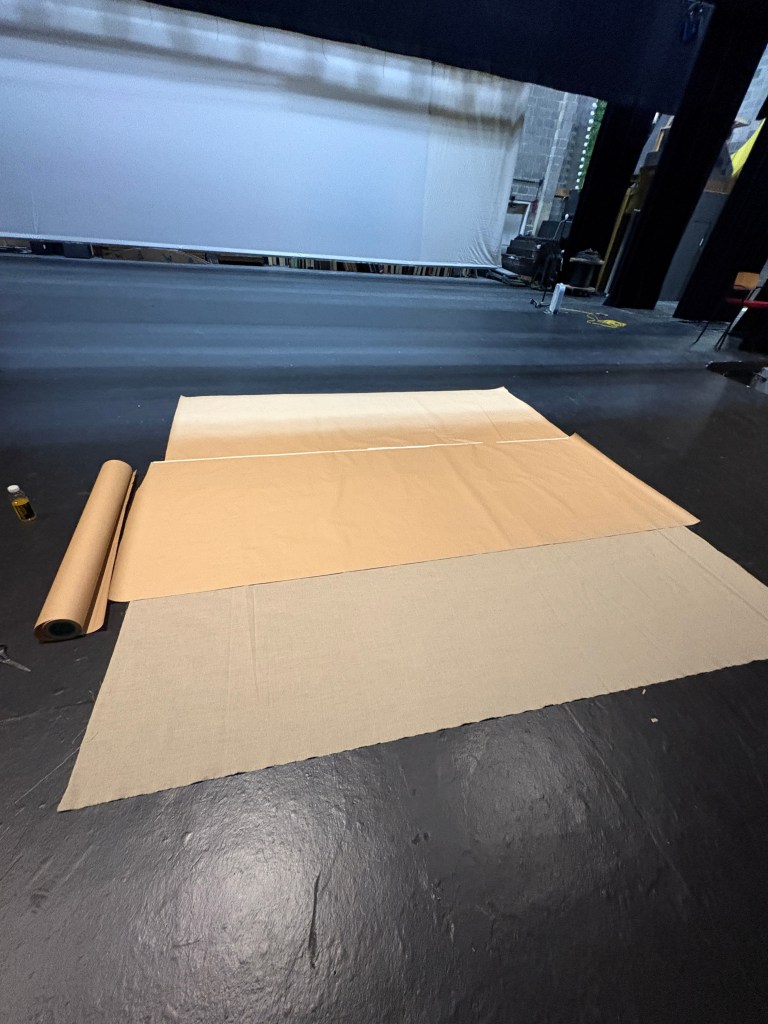
- A pounced backdrop, executed on a sized linen canvas using historical handmade tools like a flogger and charcoal pounce and sized with hide glue in accordance with Sabatini.
The whole experience felt like stepping directly into a Renaissance workshop, following the same steps a scenic painter might have used for the courts of Ferrara, Florence, Venice or Urbino.
Process Gallery
Preparing for the Event
One of the great joys of this project was the research. As part of my professional life, I regularly teach scenic painting and I had previously taught a course on Italian Renaissance image transfer methods for an SCA Schola, so I already had some familiarity with the vocabulary and manuscripts. This project let me go deeper, reading primary accounts of early audiences gasping at the new perspective scenery, studying Vasari’s technical notes, and revisiting Serlio’s diagrams with new eyes.
There were some mishaps along the way. I am learning that each pigment reacts differently to my paint recipe; I am perfecting my process for sizing the linen canvas of the backdrop. I also had a hilarious domestic moment during prep: one evening Phelippe casually reached into what he thought was just another Amazon delivery… only to pull out a fistful of squirrel tails destined to become “period-appropriate” brush bristles. He has recovered (mostly).
The Day of St. Eligius
The event atmosphere was wonderful; warm, collegial, and curious. I loved talking with judges and visitors about early theater technology, the magic of perspective painting, and the tactile satisfaction of grinding pigment, stretching linen, and pouncing a cartoon by hand.
One of the highlights for me was seeing how engaged the Populace was. Folks seemed genuinely excited that theatrical arts, especially behind-the-scenes stagecraft, have such deep medieval and Renaissance roots. Several people told me they’d never thought about the process behind painted scenery before, which felt like a win in itself. Seeing folks be genuinely excited about, “Never seeing anything like this at and A&S competition” was so exciting!
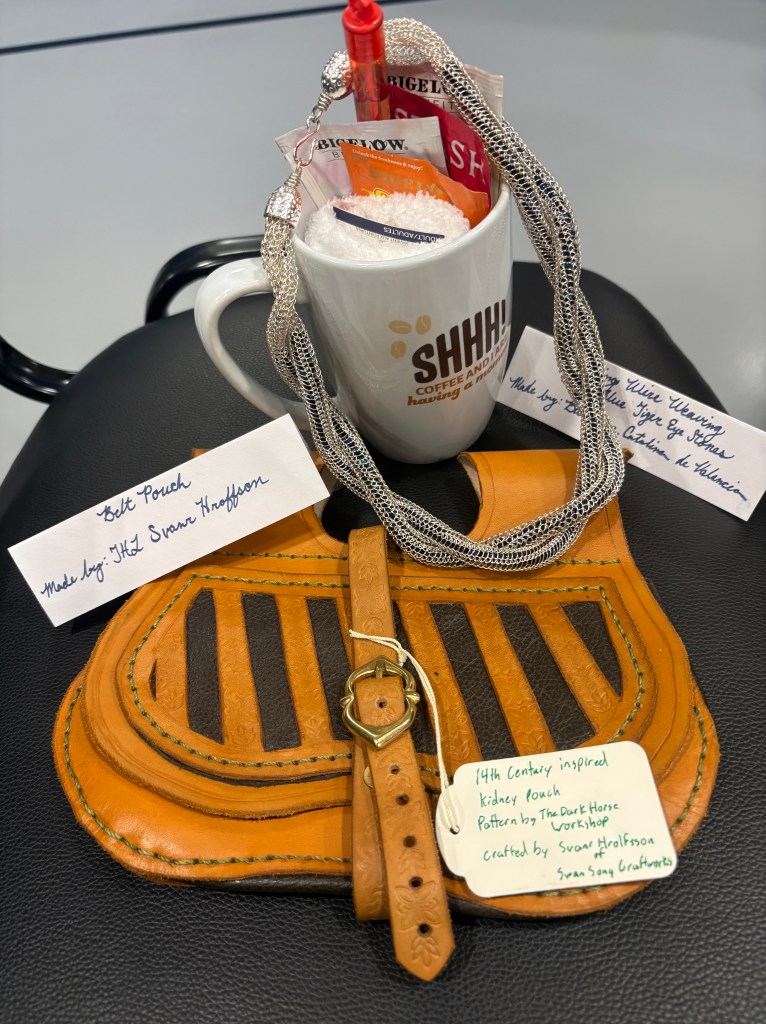
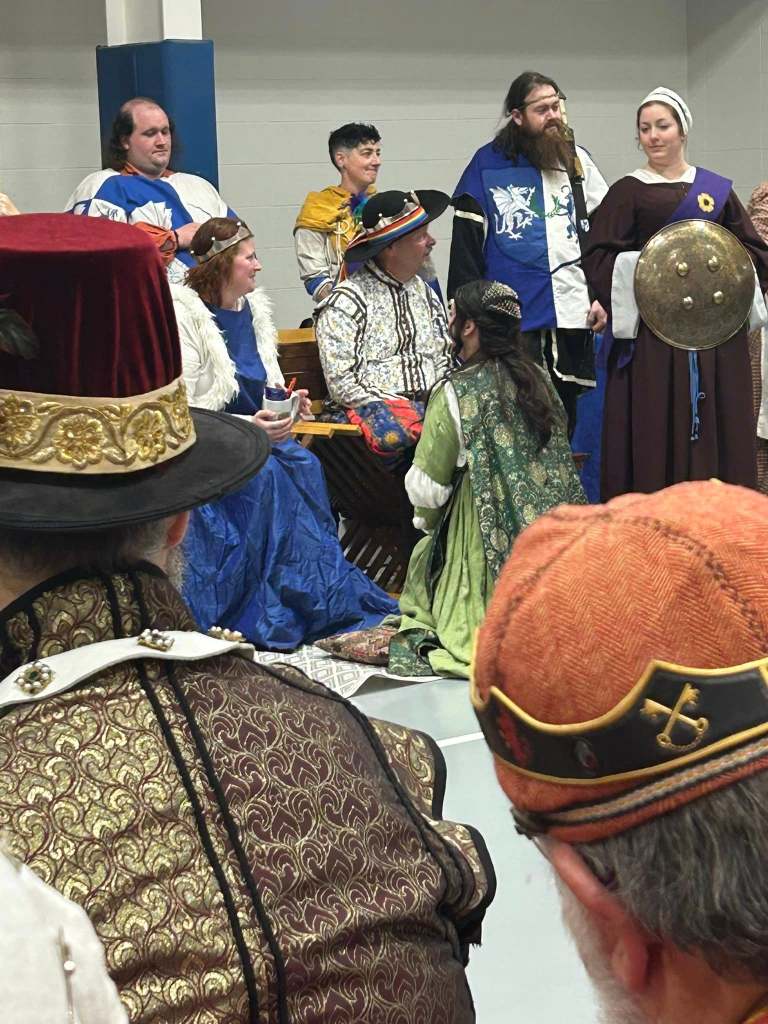
My judges were thoughtful and I loved speaking with them and reading their feedback. Being in the room with so many amazing artists was awe inspiring. To be honored with Artisan Level Champion and Populace Choice was the sweetest possible surprise. Furthermore, I was able to choose from the most beautiful prizes. I chose this gorgeous kidney pouch by THL Svanr Hroffson and this breathtaking Viking wire-wrapped necklace by Baronessa Catalina de Valencia. Additionally, her excellency of Dragonship Haven gave me a beautiful self-care package with a mug, tea, cozy socks, and all kinds of goodies.
Looking Ahead
This project has inspired me to keep going. Next steps I’m considering:
- Expanding this backdrop into dimensional wing pieces.
- Experimenting with three-dimensional relief carving added to scenic flats.
- Attempting more period pigment recipes using historically documented materials.
- Diving deeper into Sabbatini’s stage machinery diagrams to build a working miniature.
And of course… PAINTING THIS BACKDROP FOR THE UPCOMING VENETIAN EVENT IN SETTMOUR SWAMP!
I am so very grateful for the entire experience. I’m grateful: to the event stewards, the judges, my fellow artisans, and everyone who stopped by to chat, ask questions, or simply share excitement for this beautiful blend of theater and history. I am also tremendously grateful to my husband Phelippe for all his help along the way, and to Vivian who is the most supportive Laurel ever!
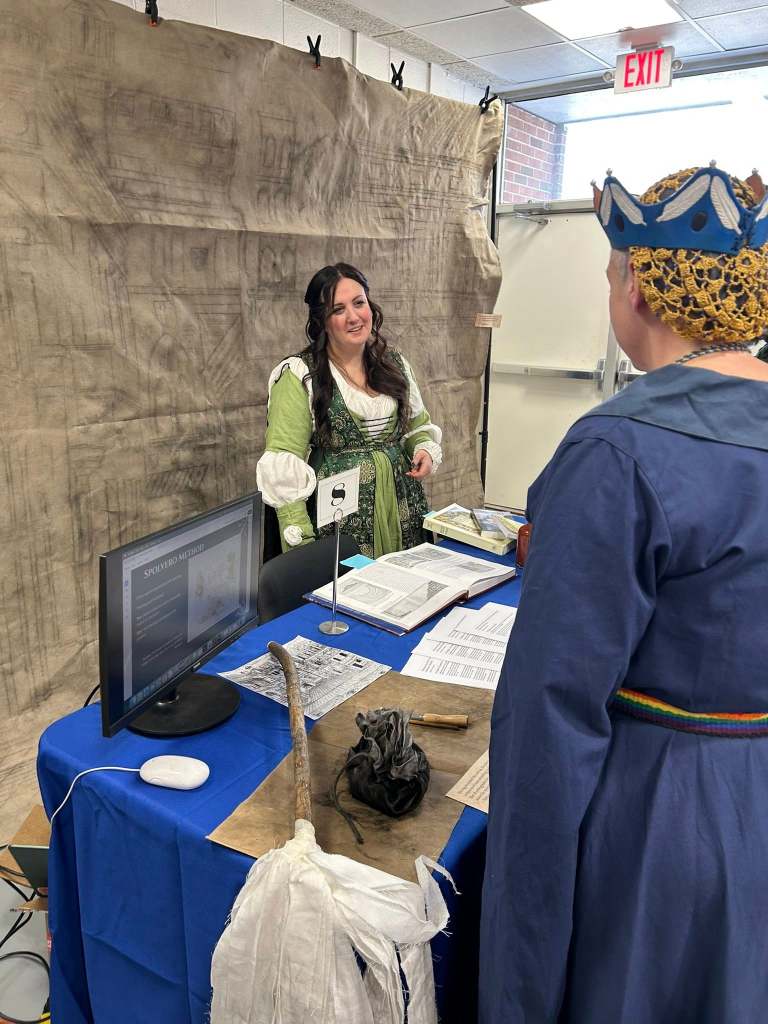
St. Eligius uses a series of “12 Questions” to help entrants with their documentation. Here is a link to view my document: Emeline’s 12 Questions
 Spar, Disengage, Rosemary, and Time(s)...past